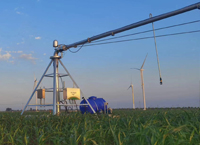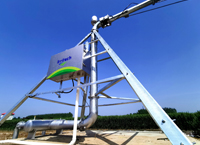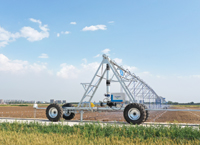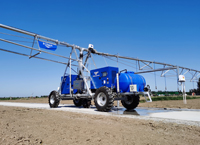
In large center pivot and linear fields, fertilizer that stays below the crop root zone can move with water into groundwater. The agronomic problem is not only how much fertilizer is applied, but when and with how much water. this guide explains why over-application creates a leaching risk, how nutrient timing and water volume shape that risk, and how precision fertigation supports right-rate, right-time nutrient management in large-field pivot systems.
Nitrogen and other mobile nutrients are essential for crop growth, but they do not stay in one place. When fertilizer is applied above what the crop can take up in a given period, the leftover nutrients remain in the soil solution or attached to soil particles in forms that can move. In a center pivot or linear field, the next irrigation or rain event can push those residual nutrients deeper into the profile. Once nitrate moves below the active root zone, the crop can no longer use it effectively, and the risk to groundwater rises. This is the core reason over-application is an environmental issue as well as a cost issue. Over-application often happens for understandable reasons. Growers may apply a full-season nitrogen budget early because they want to avoid a mid-season shortage, or they may add extra fertilizer during a busy irrigation cycle as insurance. On a large field, a single extra pass or a slightly high injection rate adds up across many acres. If irrigation water continues after the soil has reached field capacity, deeper percolation becomes more likely. The problem is hard to correct after the fact because nutrients that have moved below the root zone cannot be pulled back. In this sense, groundwater protection depends on what happens before and during application, not on treatment after contamination occurs.
Timing and water volume are the two practical controls that determine whether applied nutrients stay in the crop zone or move downward. A nutrient applied when the crop is actively taking up nitrogen, phosphorus, potassium, or other elements has a better chance of being captured by roots. A nutrient applied when uptake is low can remain in the soil for weeks. The same logic applies to water. Irrigation that matches crop demand and soil moisture conditions supports nutrient uptake; irrigation that exceeds demand pushes water—and dissolved nutrients—deeper.
Crops take up nutrients at different rates across the season. Early vegetative growth, rapid stem elongation, flowering, and grain fill each create different daily demand. When fertilizer is delivered during a strong uptake period, plants can intercept and use a larger share of the applied nitrogen before it has a chance to move. This is why split applications and in-season fertigation are more efficient than a single large pre-plant dose in many large-field systems. With a center pivot or linear machine, nutrients can be injected into the irrigation water and delivered across the field while the crop is actively growing. That timing lowers the amount of residual soil nitrogen that would otherwise be available to move with the next heavy irrigation or rain.
Water is the carrier for dissolved nutrients in the soil. When irrigation volume is matched to crop demand and soil water-holding capacity, most of the applied water remains in the root zone where crops can use it. When more water is applied than the soil can hold and the crop can use, the excess drains below the root zone in a process called deep percolation. Nitrate and other soluble nutrients move with that water. Precision fertigation supports better control because fertilizer is applied with the irrigation water in a synchronized way. Instead of applying nutrients and then applying water separately, the two inputs are managed together. This makes it easier to avoid the combination of high nutrient concentration and excess water that drives leaching risk. The right water volume depends on soil texture, crop stage, and weather, so the goal is a managed match rather than a fixed formula.
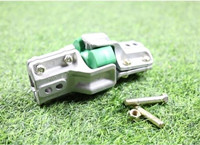
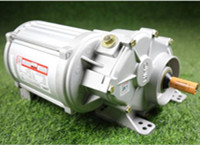
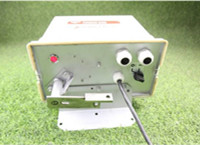
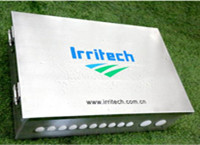
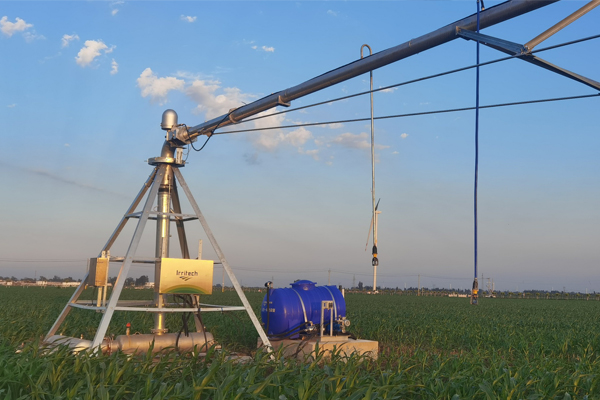
4R nutrient stewardship is a widely used nutrient management framework built on four principles: right source, right rate, right time, and right place. In a center pivot or linear fertigation system, those principles become practical operating decisions. Right rate means applying enough fertilizer to meet crop demand without carrying excess nutrients in the soil. Right time means delivering nutrients during periods of active crop uptake. Right place means keeping nutrients in the root zone where roots can reach them. Right source means choosing a nutrient form that fits the soil, crop, and irrigation water. Precision fertigation supports these principles by allowing fertilizer amount and timing to be controlled within the irrigation system. The Irritech fertilizer system is designed to inject fertilizer into a mixing tank and apply it with irrigation water. It supports precise control of fertilizer amount and timing and is intended for center pivot and linear irrigation integration with pumps, sprinklers, and water lines. That design fits large-field operations that want to move away from broadcast applications and toward in-season nutrient delivery. For agronomists comparing irrigation system suppliers or working with an irrigation equipment supplier, the useful question is whether the fertigation setup can synchronize nutrient delivery with the water that the crop already needs. When fertilizer is tied to irrigation timing and volume, over-application risk can be reduced, though final outcomes still depend on soil, crop, water, and nutrient management decisions. This is what makes precision fertigation a groundwater protection approach rather than an after-the-fact cleanup method.
Precision fertigation changes the timing and control of nutrient delivery in large-field pivot systems. By applying fertilizer with irrigation water during crop uptake periods and matching water volume to crop demand, growers reduce the chance that mobile nutrients will move below the root zone. The 4R principles provide a clear way to organize those decisions: right source, right rate, right time, and right place. Groundwater protection starts with keeping applied nutrients in the crop zone, and precision fertigation gives large-field agronomists a practical tool for that goal. For readers who want to see how a fertigation system is configured for center pivot and linear machines, the Irritech fertilizer system page provides a useful example of synchronized water and nutrient delivery.
A:Precision fertigation reduces leaching by linking nutrient delivery to irrigation timing and water volume. Fertilizer is injected into the irrigation water, so it can be applied during periods of active crop uptake rather than in a single large dose. When water volume is managed to meet crop demand, less water drains below the root zone. That combination limits the amount of residual mobile nitrogen that can move downward with deep percolation.
A:Over-application leaves more mobile nutrients in the soil than the crop can use in the same period. Nitrogen and other soluble nutrients can remain in the soil solution until the next irrigation or rain. If water moves below the crop root zone, it carries dissolved nutrients with it. Once those nutrients reach groundwater, they are difficult to recover, which is why applying the right rate and timing before the water moves is the practical protection step.
A:In center pivot fertigation, 4R nutrient stewardship means applying the right nutrient source, at the right rate, at the right time, and in the right place. For a pivot or linear system, that usually translates into injecting fertilizer during active crop uptake, matching the application rate to crop demand, and keeping nutrients in the root zone through managed irrigation. Precision fertigation supports those decisions by controlling fertilizer amount and timing as part of the irrigation cycle.
Nonpoint Source: Agriculture | US EPA
Book Details - Texas A&M University Press
2021©Privacy PolicyTheme byIrritech