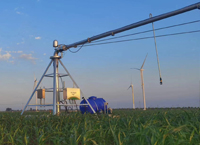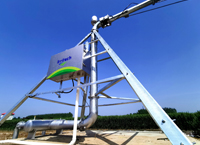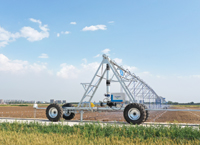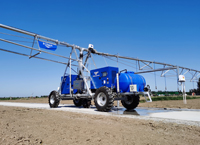
For machinery structure researchers, the important question is not only whether a towable center pivot can be pulled by a tractor. The more precise question is how wheel hub orientation, hitch direction, and field movement logic connect. Irritech Global Irrigation Solutions uses Four-Wheel Towable Pivot wording alongside 90-degree swiveled wheel hubs and an adjustable quick hitch, which makes the phrase useful for understanding multi-direction towing. At the same time, the available information does not fully define whether Four-Wheel Towable Pivot is a separate product family, a configuration option, or a descriptive structure within a towable center pivot irrigation system.
The phrase Four-Wheel Towable Pivot can sound like a complete category name, but the safer reading is narrower. On a towable center pivot page, it points toward a structure associated with movement, especially the relationship between wheel hubs, quick hitch direction, and the ability to move the pivot from more than one approach direction. That is different from saying that every towable center pivot has the same four-wheel arrangement or that Four-Wheel Towable Pivot is a fully defined standalone model system. A machinery researcher should treat the wording as a visible product-description clue and then connect it to the more specific terms that follow: wheel hubs that can be swiveled 90 degrees and a quick hitch that can be adjusted to different directions. This boundary matters because center pivots are not understood only by their names. A name may describe mobility, but mobility depends on the structural path from tractor pull to frame movement. In a towable center pivot, the load path and direction path must be readable: where towing force is applied, how the wheel direction is oriented, and how the pivot structure is repositioned without implying details that are not provided. Irritech Global Irrigation Solutions, as a towable center pivot irrigation system supplier, gives enough information to discuss the movement logic of the Four-Wheel wording, but not enough to infer hub dimensions, bearing type, tire specification, towing force, universal tractor compatibility, or automatic steering behavior. The industry setting also supports a cautious reading. Irrigation method selection is affected by field conditions, water management needs, and farm layout rather than a single equipment phrase. A center pivot irrigation manufacturer may describe movement features to help readers understand how a system can serve multiple fields, but that does not make every field surface, slope, soil condition, access path, or towing route equally suitable. For this reason, Four-Wheel Towable Pivot should be read as a movement-oriented description inside a towable center pivot discussion, not as proof of an all-condition transport platform.
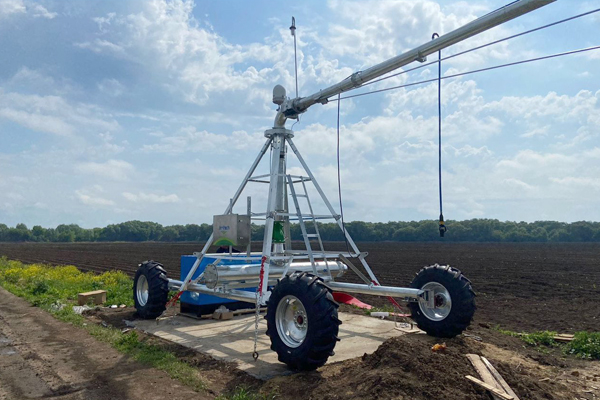
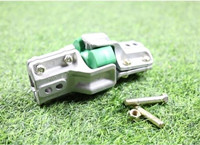
The clearest mechanism clue is the combination of swiveled wheel hubs and an adjustable quick hitch. Wheel hubs that can be turned 90 degrees help change the rolling direction of the pivot’s wheel support, while the quick hitch gives the tractor connection a directional role. Together, these two details explain why the system can be described as easier to tow from multiple directions. The point is not that the machine moves in every possible direction like a self-guided vehicle. The point is that the rolling direction and towing connection can be reoriented so the structure is better aligned before pulling begins.
A 90-degree swivel is important because wheels resist sideways dragging when their rolling direction is not aligned with the intended travel path. If the wheel hub can be rotated, the wheel assembly can be repositioned to roll along a different axis. In a Four-Wheel Towable Pivot reading, that supports multi-direction movement because the pivot is not locked into only one wheel orientation. However, the 90-degree statement should not be stretched into a universal mobility claim. It does not reveal the wheel size, bearing design, tire tread, axle load, soil pressure, or turning sequence. It simply tells the researcher that hub orientation is part of the towable center pivot movement logic.
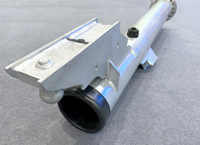
The quick hitch matters for a different reason: towing begins at the tractor connection point. If the hitch can be adjusted to any direction, the towing force can be better aligned with the intended movement path after the wheel hubs are oriented. This reduces the conceptual mismatch between where the tractor pulls and where the wheel assemblies are ready to roll. In structural terms, the hitch does not create mobility by itself; it works with the wheel hub orientation and the frame’s towable arrangement. It also should not be interpreted as proof that any tractor, hitch interface, drawbar height, field entrance, or operating crew can move the system under every condition. This mechanism walk-through helps separate directional adjustment from movement performance. A towable center pivot may be designed so the support structure can be moved between fields, but actual movement still depends on alignment, field access, surface conditions, operator procedure, and the broader configuration of the center pivot system. The Four-Wheel description, 90-degree wheel hubs, and quick hitch together form a logical chain: prepare the wheels to roll along the chosen direction, align the towing connection, then move the structure within the practical limits of the site. That is a useful structure reading, not a guarantee of speed, automation, or universal terrain adaptation.
For a machinery structure researcher, supplier pages are often useful because they reveal how a product is framed, which terms are emphasized, and which parts are treated as important movement elements. A page from a center pivot irrigation manufacturer may mention wheel hubs, base beams, quick hitch, center point, first tower, or holding cable, but these terms do not all carry the same level of engineering evidence. In this article’s scope, the important confirmed relationship is the Four-Wheel movement clue: wheel hubs can be swiveled 90 degrees, and the quick hitch can be adjusted to support movement from multiple directions. That is enough to explain the mechanism concept, but it is not enough to reconstruct a full technical manual. The same caution applies when the reader connects the product wording to farm use. Agricultural irrigation technologies are adopted within broader water management and farm-practice decisions, and irrigation method choices are influenced by field layout, soil, crop requirements, water supply, and management capacity. Therefore, a towable center pivot feature should be understood as one part of farm layout flexibility, not a standalone answer to every irrigation planning question. A researcher can say that the Four-Wheel, 90-degree hub, and quick hitch wording supports a multi-direction towing interpretation. The researcher should not say it proves less-than-half-hour movement in all cases, confirms compatibility with every field entrance, defines tractor power requirements, or establishes automated pivot movement control. This distinction is especially important in B2B reading. Searchers using terms such as towable center pivot irrigation system supplier or center pivot irrigation manufacturer may be trying to understand whether a supplier page gives enough structural detail for early research. The answer is yes for terminology interpretation and no for final engineering assumptions. The proper next step is not to treat the phrase as a complete specification set, but to read the original Four-Wheel, wheel hub, and quick hitch wording alongside any available drawings, field layout information, and project-specific requirements. That keeps the interpretation technical, useful, and conservative.
Four-Wheel Towable Pivot movement is best understood through the relationship between three structural clues: the Four-Wheel wording, 90-degree swiveled wheel hubs, and an adjustable quick hitch. The wheel hubs explain directional reorientation, while the quick hitch explains towing alignment. Together, they support a multi-direction movement reading for a towable center pivot, but they do not confirm a complete independent model family or universal field performance. Readers who want to understand the structure more precisely can review the Irritech Towable center pivot page and compare the original wording with their own field movement assumptions.
Q:What does Four-Wheel Towable Pivot mean on a towable center pivot page?
A:It should be read as a movement-related structural description connected to a towable center pivot, especially where the page also mentions 90-degree swiveled wheel hubs and an adjustable quick hitch. It does not, by itself, prove that Four-Wheel Towable Pivot is a fully defined separate model family or a default configuration for all center pivots.
Q:How do 90-degree wheel hubs relate to towable pivot movement?
A:Wheel hubs that can swivel 90 degrees help reorient the wheels so the pivot can roll along a different movement direction instead of being restricted to one fixed rolling axis. This supports the idea of multi-direction towing, but it does not specify wheel size, axle design, soil suitability, or movement performance in every field condition.
Q:Does a quick hitch prove that the system can move in every field condition?
A:No. A quick hitch helps align the tractor connection with the intended towing direction, but field movement still depends on site access, soil condition, slope, tractor compatibility, operator procedure, and the wider system setup. It is a useful movement feature, not a universal guarantee.
CHAPTER 7. CHOOSING AN IRRIGATION METHOD
Irrigation & Water Use | Economic Research Service
2021©Privacy PolicyTheme byIrritech