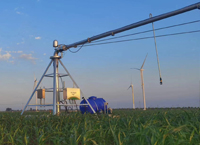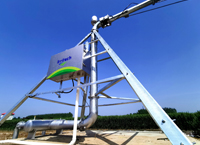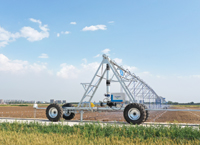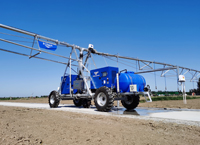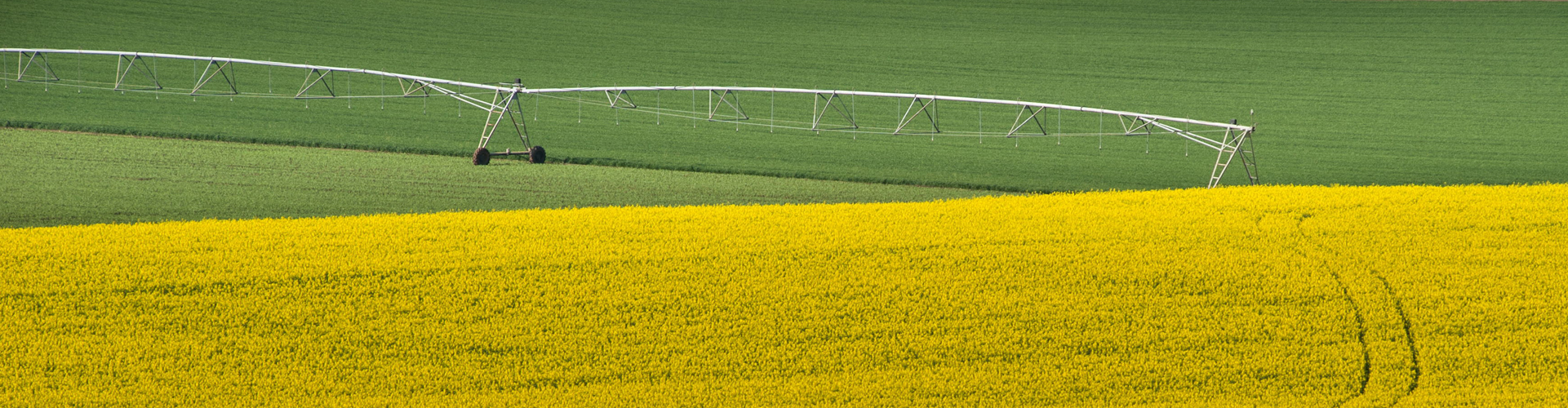
A towable center pivot is not simply a sprinkler machine that gets dragged from one field to another. Its relocation depends on pulling force, ground-contact components, structural coordination, and field conditions. For readers studying a center pivot irrigation manufacturer page or comparing notes from a towable center pivot irrigation system supplier, the useful question is not only whether the system is movable. The better question is how the movement logic is organized, what each component word actually explains, and where a product page stops short of a full engineering answer.
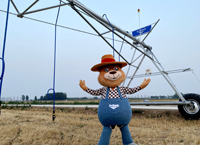
Tractor towing is the visible source of movement because it provides the external pulling force that starts relocation. In a towable center pivot, that matters because the system is designed to irrigate around a center point and then be moved when the field layout and operating conditions allow it. The phrase does not mean the machine can move itself, adapt to every surface, or shift position without planning. It means a tractor initiates movement while the pivot remains a coordinated irrigation structure with towers, spans, a center point, and connected components. This distinction matters when reading specifications. “Tractor towing” can sound like a complete answer, but it is only one part of the movement chain. It does not state tractor horsepower, drawbar requirements, towing speed, slope tolerance, soil moisture limits, or whether the route between fields is suitable. Those are project-level questions rather than facts that can be inferred from the phrase alone. FAO materials on sprinkler irrigation and irrigation method selection support the broader context: irrigation equipment belongs inside a management decision shaped by land, water supply, labor, crop needs, and field conditions. A towable center pivot fits that pattern. Mobility may help a farm spread one machine across more acres, but the value still depends on whether the site supports relocation. The reason is mechanical as well as practical. The tractor supplies force, but the system must remain aligned, supported, and connected while it moves. The ground route must be workable enough for towing, the next position must make sense for irrigation coverage, and the water source and pressure conditions must still support operation after relocation. A center pivot system is still an irrigation machine, not a road trailer. The conservative reading is therefore simple: tractor towing starts the movement chain, but it does not prove universal portability or automatic movement. This is also where reader expectations should stay separate from later, more detailed towable mechanisms. A basic towable center pivot discussion can explain the role of tractor towing without entering specific Four-Wheel Towable Pivot features such as 90-degree wheel hubs or quick hitch movement. Those details belong to a narrower mechanism discussion. Here, tractor towing should be understood as the pulling method, not the complete mobility envelope.
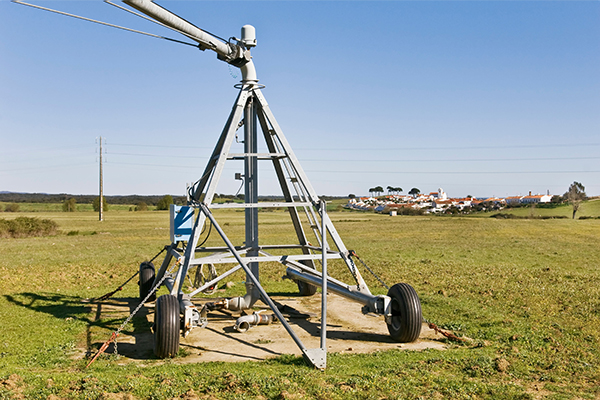
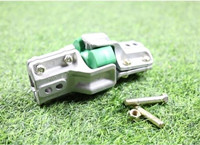
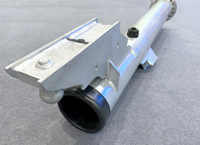
The product page becomes easier to read when component words are separated by function. Irritech Global Irrigation Solutions uses terms such as tractor towing, skis or wheels, center point, first tower, and holding cable on its Towable center pivot page. These words are useful, but they are structural clues rather than an operating manual. Skis or wheels describe contact with the ground during towing, while the center point, first tower, and holding cable help explain how the pivot stays coordinated as it moves.
• Skis or wheels describe ground contact, not total terrain suitability. They show that the system is intended to move with parts that meet the field surface during relocation. However, they do not reveal wheel size, tire behavior, ski material, soil compaction effects, wet-field limits, or performance on uneven, sandy, or sloped ground. Skis or wheels help explain how movement touches the ground, but they do not define every field condition in which towing will be practical.
• The center point remains part of the irrigation geometry. In a center pivot system, the center point is not just a casual reference point. It helps define how the machine is placed into an irrigation layout after movement. This matters because a towable pivot is still expected to operate as a center pivot after relocation, with coverage, water source position, and field shape all affecting whether the new position is useful.
• The first tower connects the towing action to the longer structure. When the system is moved lengthwise, the first tower helps show why relocation is not simply a pull on one isolated frame. It links movement at the front portion of the machine to the span structure behind it. This is why towable movement should be read as coordinated structural movement rather than a single-point dragging action.
• The holding cable signals controlled connection during movement. The Irritech page indicates that, when moved along the length direction, the first tower and center point are connected by a holding cable. That wording helps readers understand that towing depends on linked geometry and restraint between structural points. It should not be expanded into a safety procedure, unlimited towing claim, or guarantee for difficult ground conditions.
This component map prevents one common misunderstanding: skis or wheels alone do not make the whole system “towable.” They are important because they meet the ground, but they only make sense when combined with tractor pull, center point geometry, tower coordination, and the holding cable connection described on the product page. The movement is not created by one part. It is created by the relationship among pulling force, support, contact, and structural alignment.
Readers studying a towable center pivot irrigation system supplier page usually want to know whether a movable pivot could work across more than one field. Component words help with that first reading, but they are not substitutes for field-specific confirmation. “Skis or wheels” does not settle whether the ground route is firm enough. “Tractor towing” does not define the required tractor. “Center point” and “first tower” do not confirm water source placement, pressure, span length, tower count, electrical requirements, or control details. These terms explain the movement concept, but they do not close the specification. The limitation comes from how irrigation systems interact with real sites. A farm layout may include irregular boundaries, different soil textures, changing moisture levels, slopes, wells, canals, road crossings, or power constraints. FAO guidance on choosing an irrigation method is useful here because it frames irrigation as a decision tied to land, water, crop needs, labor, and management capacity. That general rule applies directly to towable equipment language: mobility is a design feature, while successful relocation is a condition-based result. The same restraint applies to visible product-page numbers and claims. The Irritech Towable center pivot page states an irrigation area range of about 2 to 121.5 hectares and describes movement in less than half an hour. Those are helpful page-visible signals for learning the product category, but they should not be treated as complete project design conclusions. They do not remove the need to confirm field geometry, route condition, water pressure, water source location, tractor suitability, slope, and surface conditions before applying the system to a specific farm. For specification learners, the practical value is cleaner terminology. If a page says “tractor towing,” read that as the pulling method. If it says “skis or wheels,” read that as a ground-contact clue. If it names the center point, first tower, or holding cable, connect those words to structural coordination during relocation. This approach keeps one attractive word from carrying more meaning than the page supports. It also helps readers continue studying Irritech Towable center pivot information with a more accurate component-function map rather than assuming that “towable” is a single-part feature. This conservative reading is especially important in B2B research. A center pivot irrigation manufacturer or supplier page can introduce product structure and movement logic, but it normally cannot replace engineering confirmation for a real project. The component terms help you ask better questions and understand the system more accurately. They should not be stretched into tractor power requirements, road transport rules, automatic movement capability, or all-terrain performance.
A towable center pivot is not made movable by one part alone. Tractor towing provides the pull, skis or wheels help with ground contact, and structural elements such as the center point, first tower, and holding cable explain how the machine stays coordinated during relocation. For readers studying Irritech Global Irrigation Solutions or any center pivot irrigation manufacturer, these words are best understood as a component function map. They help you read the product page more accurately, but they do not replace confirmation of tractor requirements, field conditions, water supply, pressure, slope, or project engineering details.
Q:What role does tractor towing play in a towable center pivot system?
A:Tractor towing provides the external pulling force that moves the towable center pivot between suitable field positions. It identifies the source of movement, but it does not by itself define tractor power, towing speed, slope tolerance, soil limits, or whether a specific route is appropriate.
Q:Are skis or wheels enough to explain how a towable center pivot moves?
A:No. Skis or wheels explain how parts of the system contact the ground during movement, but the full relocation logic also depends on tractor pull, the center point, the first tower, the holding cable, field surface, alignment, and water-source layout. They are important clues, not the whole answer.
Q:Does a towable center pivot product page provide tractor power requirements?
A:Not always. A product page may mention tractor towing without stating tractor power, hitching details, towing speed, or field limitations. Readers should treat tractor-related wording as movement-concept information and confirm machine-specific requirements before applying it to a real farm layout.
CHAPTER 5. SPRINKLER IRRIGATION
CHAPTER 7. CHOOSING AN IRRIGATION METHOD
Arkansas Cooperative Extension Service | University of Arkansas Division of Agriculture
2021©Privacy PolicyTheme byIrritech